

NMPED – Black Education Act
The New Mexico Public Education Department – Black Education Act (BEA) Bureau – is pleased to announce our 5th annual conference:
Building an Equity Bridge Conference: Sustaining the Pillars
April 17–18, 2026
New Mexico Farm & Ranch Heritage Museum – Las Cruces, NM

Kimberly York
Manager, NMPED Black Education Act
Conference Organizer
View Bio
Kimberly currently oversees the Black Education Bureau for the New Mexico Public Education Department. She is a doctoral candidate at Grand Canyon University, completing a Ph.D. in psychology with an emphasis in organizational psychology. Her dissertation focuses on perceived organizational support and occupational burnout. She is an independent licensed clinical social worker (mental health therapist) with over 25 years of blended experience in organizational leadership, youth development, training facilitation, and racial and social justice. She excels in education and community-based development, strategic planning, and systemic transformation. Her clinical competencies include resiliency-based mental health assessments, treatment planning, and conducting individual and group therapy with children, youth, and families.
As a servant leader, Kimberly has a proven record of commitment to service. She was appointed by Governor Michelle Lujan Grisham to the New Mexico Racial Justice Council and elected as the Diversity Coordinator of Las Cruces Chapter of the American Association of University Women (AAUW). She previously held additional community leadership roles as the 2nd vice president of Dona Ana County NAACP (education chair) and a member of the Executive Committee of the state of New Mexico Office of African American Affairs. She has provided consulting services to many organizations including Las Cruces Public Schools, United Way of Southwest New Mexico, Ngage New Mexico, La Casa, and more.
Kimberly holds a bachelor of social work from Capital University. She earned a masters of social administration and a masters of nonprofit organizations (specialization in nonprofit management) from Case Western Reserve University (CWRU). Additionally, Kimberly is an alum of the Treu – Mart Resiliency and Youth Development Fellowship at CWRU’s Mandel Center for Non-Profit Organizations. Her international experience includes organizational and youth development in Bangladesh and the Netherlands. Kimberly holds independent clinical social work license (with supervision designation), non-profit management certification, advanced mediation certification, and No Bullies, No Victims trainer. She is a trust-based relational intervention (TBRI) practitioner, national trainer of nurturing parenting, and circle of security. She is most proud to be a national resiliency trainer and has completed national character education training by the Josephson Institute on Ethics. She is a member of the Phi Alpha National Social Work Honor Society and the Alpha Sigma Lambda Honor Society for Adult Learners.
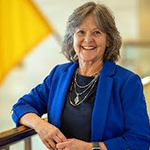
Yvonne Garcia
Deputy Secretary of NMPED Student Support Services Division
View Bio
Yvonne García, the deputy secretary for the Division of Student Support Services (SSSD), is a dedicated advocate for students with over 35 years of experience serving New Mexico’s students and families. Her diverse background includes roles as a teacher, school principal, associate and deputy superintendent in the public schools, a private mentor/school improvement consultant, and a deputy director at the New Mexico Public Education Department (PED). She has extensive experience as an educational leader in the public schools as an associate and deputy superintendent after leading three high schools as principal. She has a proven track record of being a systems thinker and champion of equity work. Her leadership positions followed her work as a classroom math and science teacher. She was named a turnaround principal because she led a team to reform a school that was historically low performing. As a result, the attendance and graduation rates improved in the first three years. Her foundational understanding of reform efforts to teaching, learning and support structures further developed as she led the departments of equity, multicultural languages, and curriculum. Her passion for educational work was further developed as a school improvement consultant through Southern Regional Education Board where she trained, mentored, and facilitated principals and teachers. Throughout her career, she has consistently championed work that aligns with the mission of the SSSD by working to improve the lives and educational outcomes of students.
The SSSD’s mission is to prevent and eliminate barriers to a high-quality education by delivering vital support, training, and programs that foster an equitable environment where all students can succeed. SSSD Houses At-Risk Intervention Response Bureau, Black Education, Hispanic Education; Safe & Healthy Schools Bureau; Student Success & Wellness; and Title I: Student, School and Family Support Bureau. Leadership and oversight of all state and federal education acts also lives under the SSS umbrella.

Dr. Royce James
Howard University Plasma Physics Laboratory Executive Director
Keynote Speaker – April 18
View Bio
Plasma physicist and developer of community-centered anti-oppression flourishing futures, Professor James, an expert innovator, has demonstrated outcomes to further the Department of Defense, Department of Homeland Security, Department of Energy, Coast Guard, Air Force, and the American Physical Society’s Division of Plasma Physics STEM and workforce initiatives.
Industry and academic experts routinely leverage plasma physics and expertise as the Air Force Institute of Technology Chief Workforce Officer for over 10,000 in-person and remote members. He is the lead “Healthy to Innovative” spaces integrator and STEM-mindedness cultivator for over 3,000 professional society members. Dr. James is a consummate academic and military service professional empowering hiring, project development, and innovative climates for over a thousand individuals over the past 27 years. His plasma physics and workforce development expertise is routinely sought by experts such as DOE Office of Science’s Workshop on Fusion Energy Development via public-private partnerships for the White House, the Fusion Energy Company’s Advisory Board, Princeton Plasma Physics Laboratory Fusion Energy and Nonproliferation Workshop SME, and Inertial Fusion Energy Basic Research Needs – Workforce Development Crosscut Panel.
Professor James also served as a founding member of New London’s Science, Technology, and Mathematics Magnet School and a member of the Nuclear Energy Advisory Council for the state of CT.
Royce is a recently retired Coast Guard Captain (O6) as a member of the Permanent Commissioned Teaching Staff at the U. S. Coast Guard Academy with an earned academic rank of full professor. With a doctorate in plasma physics from Stevens Institute of Technology, a master’s in plasma physics from the Applied Physics Department at Columbia University, and a B.S. in physics with minors in music and mathematics from New Mexico State University, Royce has expertise in both our burgeoning fusion/plasma ecosystem and leadership, workforce development, and community futures development.
A US Coast Guard active duty military member with over 28 years of enlisted and over service, Royce has served as the Coast Guard Academy Plasma Lab (CGAPL) director for over fifteen years. In that time, more than 34 undergraduate, 8 master’s, and three Ph.D. students, plus a PostDoc, have matriculated through CGAPL with 24 associated student presentations at national conferences and six publications.
In 2025, Professor James established the Howard University Plasma Lab (HUPL) as its executive director. HUPL is a nexus for problem-posed hands-on undergraduate, graduate, postdoctoral, and researcher (early career to emeritus) exploratory pedagogy. The lab’s focus is on magnetohydrodynamic (MHD) physics and other applications that positively impact our communities. HUPL is where investigations into plasma physics experiments are required to identify and conceive solutions to today’s and tomorrow’s scientific challenges. Experiments currently take shape in four general research areas:
- Fusion energy and (high temperature and density) plasma propulsion diagnostic development on the Helicon plasma Experiment (HPX)
- Low-temperature and density plasma water treatment investigations
- Space plasma and weather studies
- Cosmochemistry research into the origins and evolution of our solar system
Helicon plasmas in a low-pressure regime and a discharge plasma in the standard temperature and plasma (STP) regime are being explored with typical magnetic, particle, optical, and emissive probes and other diagnostics that will be developed as learning tools and for use in experiments. CGAPL utilizes a Quantel 2.5 J high-energy laser for Thomson Scattering, as they continue to expand their data collection ability. These purchases are moving the lab toward the development of invaluable diagnostics on the Helicon Plasma Experiment (HPX) to yield real-time, simultaneous measurements of electron plasma temperature and density can be measured with a high degree of accuracy using a high-energy laser beam pulse.
Research at HUPL leverages working relationships with Princeton Plasma Physics Laboratory (PPPL), Naval Research Lab (NRL), and Air Force Institute of Technology (AFIT). Air Force Research Lab’s Directed Energy Joint Technology Office (DE-JTO), the Coast Guard, and other stakeholders have contributed in resourcing these initiatives.
American Physical Society’s Division of Plasma Physics Organizing Collective Committee: this grassroots Organizing Collective Committee (OCC) was assembled to better ascertain DPP’s current STEM-workforce development health and move forward in creating a more diverse, equitable, and inclusive DPP. Generally, plasma physicists are not subject matter experts in issues of climate and STEM-workforce development, so the OCC recommendations for outside support are vital. In particular, the OCC connected outside subject matter experts to study the climate within plasma physics via the division. OCC has determined that more specific STEM-workforce development training is required to unpack this data effectively. The OCC encourages the DPP to implement evidence-based near-term actions that promote a positive climate, such as training in cultural competence for all members, psychological safety, and bystander intervention for program managers and principal investigators; enacting new internship and funding opportunities for historically marginalized groups; and adopting a human relations code & bias incident policy at institutions and technical meetings.
Leading change: Professor James created a “Modied Healthy to Innovative Framework” from Dr. Kimberly McLear’s “Healthy to Innovative Framework” (HTI®Framework) that begins with psychological safety, followed by moral courage, cultural competence, community, justice, mission readiness, and finally innovation. The Modied HTI® Framework is highly versatile in its application to both groups and institutions. Professor James and Dr. McLear have extensively taught and guided its application. From years of experience, Royce created a theory of change that centers on the transformative development of Institutions of Higher Education (IHE) and the HTI®Framework for implementation by the OCC. This theory of change employs the Modied HTI®Framework in a three-phase approach: planning, early implementation, then assessment and improvement, with a DTS logic model as the evolutionary driver for each of the three.
Air Force Institute of Technology (AFIT) Chief Workforce Officer (CWO): develops, implements, executes, and influences policies related to the workforce by guiding, facilitating, and evaluating critical processes on behalf of the institute. AFIT, like much of the military, faced issues of division, extremism, and marginalization that stifled servicemember cohesion, mission readiness, and innovation. As the CWO, Royce:
- Guided the institution to develop equitable hiring and enrollment management strategies for recruitment and retention of talented students, faculty, and staff from all backgrounds with an emphasis on AFIT’s climate as the central catalyst.
- Cultivated solid professional relationships across the AFIT and Air Force community through engagements with personnel
- Advised the Director and Chancellor on sensitive/confidential issues to achieve mission goals.
- Taught, mentored, and advised personnel to develop knowledge, competencies, strategies, and actions to foster psychological safety in the workplace to realize STEM-workforce goals. Exports resulted in comprehensive and integrated action plans to support the AFIT strategic plan and designed assessment methods and techniques to measure progress toward desired outcomes.
Black Education Act Advisory Council Members
- Dr. Johnna Rocker-Clinton – Chair
- Dr. Stephanie Mack – Vice Chair
- Sandra Aaron – Secretary
- Dr. Moses Allen
- Hakim Bellamy
- Dr. Manuel Bustamante
- Andrea Determan
- Chrishawna Nickols
- Olivia Oyinatumba
- Cecil Rose
- Dr. Brandi Stone
- Dr. Patricia Trujillo
- Dr. Lenell Walton
- Nic Williams
- Dr. Cynthia Wise